

THE COMPLETE GUIDE TO FAT BURNER INGREDIENTS
Most fat burners contain a mix of stimulants, thermogenics, and absorption enhancers. Only 8 ingredients have strong clinical evidence at commercially used doses. Here is how to tell them apart.

Walk into any supplement store and the fat burner shelf will hit you with 40 products, each promising a different combination of 20-plus fat burner ingredients. Most of those ingredients are either under-dosed, over-hyped, or both. Of the 30-plus compounds that regularly appear on thermogenic labels, only 8 have strong clinical evidence at the doses brands actually use. This article names them, gives you the doses, and explains the mechanisms in plain English.
You can browse our full fat burners collection to see what a transparent label looks like in practice. But before you buy anything, read this first. Knowing the difference between a clinically dosed active ingredient and a 'thermo matrix' filler is the single most useful thing you can learn about this category. It will save you money and stop you writing off an entire supplement class because one under-dosed product did nothing.
Opening
Walk into any supplement store and the fat burner shelf will hit you with 40 products, each promising a different combination of 20-plus fat burner ingredients. Most of those ingredients are either under-dosed, over-hyped, or both. Of the 30-plus compounds that regularly appear on thermogenic labels, only 8 have strong clinical evidence at the doses brands actually use. This article names them, gives you the doses, and explains the mechanisms in plain English — this is fat burner ingredients explained.
You can browse our full fat burners collection to see what a transparent label looks like in practice. But before you buy anything, read this first. Knowing the difference between a clinically dosed active ingredient and a 'thermo matrix' filler is the single most useful thing you can learn about this category. It will save you money and stop you writing off an entire supplement class because one under-dosed product did nothing.
---
How fat burner ingredients are supposed to work
A fat burner is not a single-mechanism product. The better formulas target four distinct physiological processes at once. Understanding each one lets you judge whether a product is actually covering the bases or just loading up on cheap stimulants.
Thermogenesis is the process of raising core body temperature so you expend more calories at rest. Your resting metabolic rate goes up slightly, and the calorie deficit widens without you doing anything extra. Capsicum compounds and caffeine are the primary thermogenic ingredients with published human data behind them.
Lipolysis and fat mobilisation is about getting fatty acids out of fat cells in the first place. Adipose tissue stores fat in triglyceride form. Catecholamines like norepinephrine signal the cell to release those fatty acids into the bloodstream so the body can use them as fuel. Caffeine, EGCG from green tea extract, and l-carnitine all play a role here, though at different steps in the pathway.
Appetite suppression is the most practically important mechanism for most people. A calorie deficit is the non-negotiable condition for fat loss. Nothing in a bottle replaces deliberate food choices, but bitter orange extract and caffeine both have evidence for reducing subjective hunger and increasing satiety. That nudge matters when you are in a sustained deficit and willpower is finite.
Focus and training quality is the mechanism that gets ignored in most ingredient reviews. Training intensity drops in a calorie deficit. That costs you muscle. The modern solution is a caffeine-plus-l-theanine-plus-Huperzine A stack that keeps mental sharpness and mind-muscle connection high even when calories are low. Judge a thermogenic by how many of these four mechanisms it covers cleanly, at clinical doses, with full label transparency.
---
The 8 ingredients with the strongest evidence
These are the only fat burner ingredients with strong human clinical evidence at doses brands actually use commercially. For each one, the relevant dose range, mechanism, and headline studies are covered below.
Capsimax (Capsicum extract)
Capsimax is a patented capsicum extract from OmniActive Health Sciences, standardised to deliver a clinical dose of 100 mg per day without the gut irritation raw capsaicin causes. The delivery system uses a beadlet coating that passes the stomach intact and releases in the intestine.
The mechanism is TRPV1 receptor activation. When capsaicin binds to TRPV1 receptors, it triggers a thermogenic response: core temperature rises, norepinephrine is released, and fat oxidation increases. Sumeet et al. (2010) and Bloomer et al. (2010) both demonstrated measurable increases in energy expenditure and fat oxidation at the 100 mg dose. The reason gut-friendly delivery matters is simple: earlier capsicum supplements at equivalent doses caused enough gastric discomfort that compliance was poor and the studies were confounded. Capsimax solved that. Read more on Capsimax for a deeper look at the published data.
Bitter Orange Extract (Synephrine)
Bitter orange extract standardised to at least 30% synephrine is the practical replacement for ephedrine since the latter was banned from supplements in Australia and the US. The typical dose is 20 to 50 mg synephrine equivalents.
Synephrine is an alpha-1 adrenergic agonist. It stimulates adrenergic receptors in fat tissue, promoting lipolysis and a mild thermogenic effect. It also has appetite-suppressing properties that stack with caffeine without significantly amplifying cardiovascular side effects at standard doses. Structurally it is similar to ephedrine, but its receptor binding profile is different: it has lower affinity for beta-1 adrenergic receptors, which is why the heart rate and blood pressure response is considerably more modest. For tested athletes, bitter orange extract is currently not prohibited by WADA, but always verify with the current prohibited list for your specific sport before using any stimulant-containing product.
Green Tea Extract (EGCG)
The active compound in green tea extract relevant to fat metabolism is epigallocatechin gallate (EGCG). The clinical dose range is 200 to 500 mg EGCG per day. Meta-analyses, including the 2009 Hursel et al. review, show modest but consistent increases in fat oxidation and 24-hour energy expenditure at this range.
The mechanism runs through COMT inhibition. Catechol-O-methyltransferase is the enzyme that breaks down catecholamines like norepinephrine. EGCG inhibits COMT, which prolongs catecholamine activity in fat tissue. When you stack EGCG with caffeine (which increases catecholamine release), you get a mechanistically logical synergy: caffeine releases the catecholamines; EGCG stops them being broken down as quickly. This is one of the cleanest ingredient interactions in the thermogenic ingredients category. Green tea extract is also cheap, well-studied, and has a low side-effect profile relative to its effect size.
L-Theanine
L-theanine is an amino acid found primarily in tea leaves. The clinical dose is 100 to 200 mg, and it is almost always paired with caffeine in a 2:1 theanine-to-caffeine ratio.
The mechanism involves raising alpha brain wave activity, which produces a state of calm alertness without sedation. In the context of a fat burner, its job is to blunt the jittery, anxious edge that comes from caffeine and synephrine. The result is cleaner focus: the stimulant energy stays, the side effects are reduced. A 2008 Owen et al. study published in Biological Psychology demonstrated that the theanine-caffeine combination produced better sustained attention and accuracy than either compound alone. For a fat burner user, this means the product supports training quality rather than just ratcheting up heart rate.
Caffeine plus Dicaffeine Malate
Most thermogenic formulas use a combined caffeine stack. The total dose is typically 150 to 300 mg caffeine equivalents, drawn from caffeine anhydrous and dicaffeine malate (sold under the Infinergy brand).
Caffeine anhydrous absorbs quickly: peak plasma concentration at around 45 minutes, then a relatively fast drop-off. Dicaffeine malate binds caffeine to malic acid, which slows absorption and extends the plateau. The net result is a longer, smoother energy curve than caffeine anhydrous alone at the same total dose. This matters because the crash from a fast-absorbing caffeine spike is often what drives users to re-dose or feel the product has worn off before the training session ends.
The mechanism is adenosine receptor antagonism plus catecholamine release, which together raise alertness, thermogenesis, and fat oxidation. At doses above 300 mg per serve, the cardiovascular side effects — elevated heart rate, raised blood pressure — begin to increase faster than any fat-loss benefit. Sensible formulas cap total caffeine at 200 to 300 mg and use the dicaffeine malate fraction to extend the curve rather than raise the ceiling.
Huperzine A
Huperzine A is one of the more overlooked fat burner ingredients in public discussion. The dose is 50 to 100 mcg (micrograms, not milligrams). It has a half-life of roughly 10 to 14 hours, which makes it one of the longer-acting compounds in a thermogenic stack.
The mechanism is acetylcholinesterase inhibition. Acetylcholinesterase breaks down acetylcholine. By inhibiting this enzyme, Huperzine A raises acetylcholine levels in the brain, which sharpens focus, improves working memory, and enhances the mind-muscle connection during training. In a calorie deficit, where cognitive fatigue and reduced training motivation are common complaints, this is genuinely useful. It turns a stimulant-heavy 'feel' product into a product that also supports training performance. See Huperzine A benefits for the supporting literature.
L-Carnitine (and ALCAR)
L-carnitine's role is specific: it acts as a transporter, shuttling long-chain fatty acids across the inner mitochondrial membrane so they can be oxidised for energy. Without adequate carnitine, fatty acids accumulate outside the mitochondria and cannot enter the fat-burning pathway. The clinical dose is 500 to 1,500 mg.
There is a persistent myth that oral l-carnitine only works with a high carbohydrate intake. This comes from a single study (Stephens et al., 2006) showing that insulin enhanced carnitine uptake into skeletal muscle. In practice, oral carnitine at clinical doses does increase plasma carnitine and supports fat oxidation in a deficit; the effect is modest but real. ALCAR (acetyl-l-carnitine) is the acetylated variant. It crosses the blood-brain barrier more readily and adds a mild nootropic effect on top of the mitochondrial transport function. For context on carnitine biosynthesis and the precursor compounds involved, see what is Lean GBB and theobromine in fat burners.
Bioperine (Black Pepper Extract)
Bioperine is a patented piperine extract from Sabinsa, standardised to 95% piperine. The dose is 5 to 10 mg, which makes it the smallest active ingredient in most formulas by mass. Do not mistake that for low importance.
Piperine inhibits intestinal CYP3A4 enzymes and P-glycoprotein, both of which are responsible for breaking down or actively exporting compounds before they can be absorbed. By inhibiting them, Bioperine increases the bioavailability of co-ingested actives. The range of effect is wide: curcumin bioavailability increases by up to 2,000%, while caffeine and capsaicin see more modest but still meaningful gains. In a stack context, 5 mg of Bioperine effectively multiplies the value of every other active ingredient in the formula. A brand that chooses the patented Sabinsa form over generic piperine is making a sourcing choice that costs more per unit and signals formulation intent.
---
Ingredients you'll see on labels that don't really work (or work much less than claimed)
This is the section most ingredient guides skip because it doesn't sell anything. Here it is anyway.
Garcinia Cambogia (hydroxycitric acid) was one of the biggest fat-loss supplement stories of the 2010s. The hypothesis was that HCA inhibits an enzyme involved in fatty acid synthesis and suppresses appetite. Human trials have been consistently disappointing. A 2011 Cochrane-adjacent meta-analysis and subsequent reviews show negligible effect on body weight at commercially used doses. It is still on labels because it is cheap and has name recognition.
Raspberry Ketones are structurally similar to synephrine and capsaicin, which is where the interest started. The problem is that the animal studies showing fat-loss effects used doses equivalent to hundreds of times what any human would consume from a supplement. No human trial has replicated the rodent findings at practical doses. The ingredient is essentially marketing furniture at this point.
CLA (conjugated linoleic acid) in capsule form has a mixed track record. Some meta-analyses show a small effect on fat mass; others show no significant difference versus placebo. The effect size, where it exists, is too small to justify a prominent placement in a serious thermogenic formula. CLA may have other applications, but as a fat burner ingredient it underperforms its label presence.
Proprietary blends with hidden per-ingredient doses are the biggest structural problem in this category. When a label says 'Thermo Matrix: 2,400 mg' without disclosing how much of each ingredient is in that matrix, you cannot verify whether any active is at its clinical dose. In most cases, the expensive actives like Capsimax or synephrine are present at a fraction of the clinical dose, and the matrix weight is made up by cheap filler compounds. If a brand won't disclose per-ingredient doses, that is the only signal you need.
Mega-dose caffeine alone (400 mg or more per serve) is a tolerance problem, not a fat-loss strategy. The thermogenic effect of caffeine is real but dose-dependent in a diminishing-returns curve. Above 300 mg per serve, the side-effect burden increases faster than the fat-oxidation benefit. Formulas that lead with raw caffeine quantity and nothing else are leaning on one mechanism and ignoring the other three.
---
Why stack matters more than any single ingredient
No single fat burner ingredient covers all four mechanisms. A well-designed stack at clinical doses beats any single mega-dosed compound, and the synergies between specific ingredients are where the real formulation logic sits.
Capsimax plus caffeine together raise thermogenesis more than either alone. EGCG plus caffeine extend catecholamine action via the COMT pathway: caffeine floods the system with catecholamines; EGCG stops them being broken down too quickly. Caffeine plus l-theanine is subtractive on side effects — the focus and energy stay, the jitter diminishes. Bioperine plus everything else multiplies absorption across the entire panel.
The practical implication: a formula with 6 actives all at their clinical dose will outperform a formula with 12 actives where half are under-dosed and two are doing all the work. When you see a proprietary blend with a single aggregate weight, you have no way to verify that any active has reached its clinical threshold. The label transparency question is not a minor detail. It is the primary signal of formulation quality.
This is also why chasing individual ingredients separately often falls short. You can buy standalone l-carnitine or standalone EGCG, but you lose the compounding effect. Bioperine multiplies absorption for every co-ingested active — that only works when the actives are actually co-ingested. The caffeine-to-l-theanine ratio needs to be right; the EGCG-caffeine pairing only performs as intended when both are dosed correctly at the same time. A well-formulated stack encodes those relationships for you.
---
How to read a fat burner label like a pro
The label is the product. Marketing tells you what a brand wants you to feel. The label tells you what is in the bottle. Here is a four-step decision framework.
Step 1: Look for clinical doses on the label. Each of the 8 ingredients above has a documented clinical dose range. Capsimax at 100 mg, EGCG at 200 to 500 mg, synephrine at 20 to 50 mg, total caffeine at 150 to 300 mg, l-carnitine at 500 to 1,500 mg, Bioperine at 5 to 10 mg, Huperzine A at 50 to 100 mcg, l-theanine at 100 to 200 mg. If the label discloses per-ingredient amounts, check them against these ranges. If it doesn't disclose them, move on.
Step 2: Reject proprietary blends. A 'matrix' without per-ingredient doses is a transparency failure. There is no legitimate reason to hide individual doses from a customer. The practice exists to obscure under-dosing.
Step 3: Look for patented branded ingredients. Capsimax (OmniActive), Bioperine (Sabinsa), Infinergy dicaffeine malate. Patented forms are more expensive to source. A brand that uses them is choosing ingredient quality over margin. That choice is visible on the label.
Step 4: Check your total stim load. Add up all caffeine sources: anhydrous, dicaffeine malate (counted at roughly 73% caffeine by mass), green tea extract, guarana if present. If the total exceeds 250 mg and you are caffeine-sensitive or training late in the day, you need a different product. The stimulant load question is not just about side effects: it affects sleep quality, and poor sleep actively undermines fat loss by raising cortisol and blunting growth hormone. For a full breakdown of your options here, see how to choose thermogenic vs non-stim.
One additional check worth making: look at the supporting cast. A formula with all eight evidence-backed ingredients tells a story about the brief the formulator was given. A formula with two or three recognisable names padded out with obscure herbal extracts tells a different story. The ingredient list is a reliable proxy for the overall formulation philosophy.
---
The ingredient profile in ONEST Hyperburn
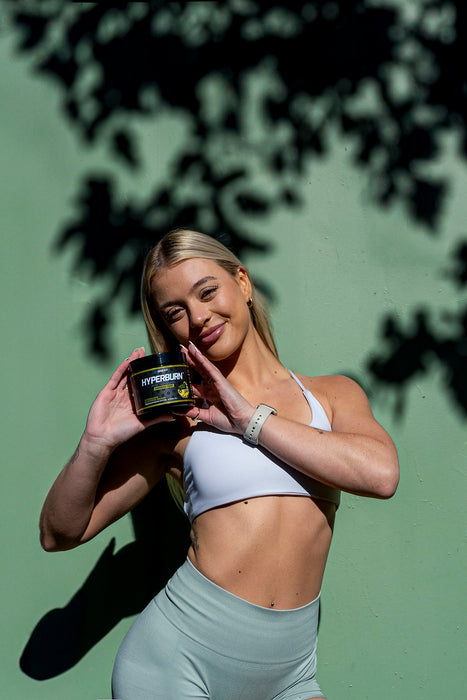
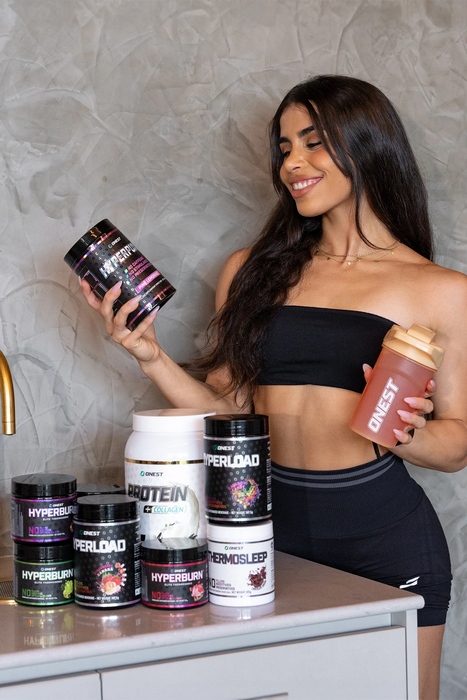
Hyperburn (our flagship thermogenic) is the product that applies everything in this article to a single formula. Here is what that looks like on the panel.
The thermogenic core is clinically dosed Capsimax plus standardised bitter orange extract. Both are at their clinical doses, both are disclosed per-ingredient. The energy stack uses caffeine anhydrous plus dicaffeine malate for a longer plateau than caffeine alone at the same total dose, balanced with l-theanine at the 2:1 theanine-to-caffeine ratio for clean focus.
L-carnitine provides the lipolysis support: fatty acid transport into the mitochondria. Huperzine A sits in the focus layer, keeping mind-muscle connection intact through a training block in a calorie deficit. Bioperine sits at the base of the formula and multiplies the absorption of every active above it.
There are no proprietary blends. Every ingredient has its dose disclosed on the panel. If you have read this far, you now have the framework to verify that claim yourself. That is the point.
The formula also reflects the stack-over-single-ingredient logic covered above. The thermogenic ingredients — Capsimax and bitter orange extract — are supported by the EGCG-caffeine synergy for extended catecholamine activity. The l-theanine-to-caffeine ratio is set deliberately. Bioperine is present not as a label decoration but because it meaningfully increases the bioavailability of every active in the panel. For evening training or for anyone avoiding stimulants, Hyperburn Caffeine-Free carries the thermogenic and focus stack without the caffeine load. If you want to add a night-time component to your protocol, Thermosleep is the option designed for pre-bed use.
You can browse the full fat burners range to compare formulas and find the option that fits your training schedule and stimulant tolerance.
---
Frequently asked questions
What is the most important ingredient in a fat burner?
There is no single most important ingredient because a fat burner targets four mechanisms: thermogenesis, lipolysis, appetite suppression, and focus. Caffeine has the broadest effect across all four and the strongest evidence base, which makes it the most foundational active in most formulas. But caffeine alone does not cover the full stack. Capsimax adds thermogenesis independent of the adrenergic pathway; EGCG extends catecholamine action; l-carnitine supports fatty acid transport. The stack is the point.
Are patented ingredients (Capsimax, Bioperine) better than generic?
Patented forms like Capsimax (OmniActive) and Bioperine (Sabinsa) are backed by proprietary manufacturing processes, and the clinical studies were conducted on those specific forms. Generic capsicum extract or generic piperine may not deliver the same bioavailability, standardisation, or tolerability. The patent also means the supplier bears quality-control accountability. Brands that use patented ingredients pay more per unit; brands that choose them are signalling a formulation priority worth paying attention to.
How long do fat burner ingredients take to work?
Caffeine and Capsimax produce measurable increases in thermogenesis and energy expenditure within an hour of dosing. The acute effects are real and fast. The fat-loss outcome is a different question: body fat reduction requires a sustained calorie deficit over weeks, not hours. Think of fat burner ingredients as tools that make the deficit easier to maintain and slightly more metabolically productive. The acute effect is hours; the visible outcome is weeks.
Can I take individual fat-burner ingredients instead of a stack?
You can, and for specific goals it makes sense. Standalone l-carnitine, standalone caffeine, and standalone EGCG capsules are all available. The practical argument for a formulated stack is the synergy: Bioperine multiplies the absorption of every co-ingested active; the caffeine-to-theanine ratio needs to be correct; the EGCG-caffeine combination only works if both are present at the right doses. Building an equivalent stack from separate ingredients is possible but costs more and requires more attention to dosing.
What's the difference between a fat burner and a thermogenic?
Thermogenic is a mechanism descriptor: it refers specifically to compounds that raise body temperature and energy expenditure. A fat burner is a broader product category that typically includes thermogenic ingredients alongside lipolytic, appetite-suppressing, and focus-supporting compounds. All thermogenics are fat burners in common usage; not all fat burner ingredients are thermogenic. Capsimax and caffeine are thermogenic. L-carnitine supports lipolysis but is not thermogenic. The distinction matters when you are reading a label and trying to verify mechanism coverage.
Can fat burner ingredients interfere with medications?
Yes, this is a real consideration. Caffeine can interact with stimulant medications, certain antidepressants, and blood pressure medications. Synephrine from bitter orange extract can amplify the cardiovascular effects of stimulant drugs. Bioperine (piperine) inhibits CYP3A4, which is also responsible for metabolising many prescription medications, potentially raising their plasma levels. If you take prescription medication, speak with your GP or pharmacist before adding any stimulant-containing supplement to your routine.
---
Conclusion + CTA
The honest summary of this entire article is short: most fat burner products fail because of under-dosing and proprietary blends, not because the underlying science is weak. The science on caffeine, Capsimax, EGCG, l-theanine, dicaffeine malate, bitter orange extract, l-carnitine, Huperzine A, and Bioperine is genuinely solid. The failure point is almost always execution — a label that hides doses, a matrix that front-loads cheap ingredients, or a single-mechanism product that ignores three-quarters of the physiology.
You now know what clinical doses look like, which thermogenic ingredients have the evidence behind them, which ingredients are largely marketing, and how to read a label against those standards in about 60 seconds. Use that framework every time you pick up a new product.
If you want a formula that meets all of those standards in a single serve, shop ONEST fat burners and look at the panel for yourself. The doses are disclosed. The patented ingredients are named. The mechanisms are covered. That is the baseline any serious thermogenic should meet — and now you know how to verify it.
FAQ
What is the most important ingredient in a fat burner?
There is no single most important ingredient because a fat burner targets four mechanisms: thermogenesis, lipolysis, appetite suppression, and focus. Caffeine has the broadest effect across all four and the strongest evidence base, which makes it the most foundational active ingredient in most formulas. But caffeine alone does not cover the full stack. Capsimax adds thermogenesis independent of the adrenergic pathway; EGCG extends catecholamine action; L-Carnitine supports fatty acid transport. The stack is the point.
Are patented ingredients (Capsimax, Bioperine) better than generic?
Patented forms like Capsimax (OmniActive) and Bioperine (Sabinsa) are backed by proprietary manufacturing processes and the clinical studies were conducted on those specific forms. Generic capsicum extract or generic piperine may not deliver the same bioavailability, standardisation, or tolerability. The patent also means the supplier bears quality-control accountability. Brands that use patented ingredients pay more per unit; brands that choose them are signalling a formulation priority worth paying attention to.
How long do fat burner ingredients take to work?
Caffeine and Capsimax produce measurable increases in thermogenesis and energy expenditure within an hour of dosing. The acute effects are real and fast. The fat-loss outcome is a different question: body fat reduction requires a sustained calorie deficit over weeks, not hours. Think of fat burner ingredients as tools that make the deficit easier to maintain and slightly more metabolically productive. The acute effect is hours; the visible outcome is weeks.
Can I take individual fat-burner ingredients instead of a stack?
You can, and for specific goals it makes sense. Standalone L-Carnitine, standalone caffeine, and standalone EGCG capsules are all available. The practical argument for a formulated stack is the synergy: Bioperine multiplies the absorption of every co-ingested active; the caffeine-theanine ratio needs to be correct; the EGCG-caffeine combination only works if both are present at the right doses. Building an equivalent stack from separate ingredients is possible but costs more and requires more attention to dosing.
What's the difference between a fat burner and a thermogenic?
Thermogenic is a mechanism descriptor: it refers specifically to compounds that raise body temperature and energy expenditure. A fat burner is a broader product category that typically includes thermogenic ingredients alongside lipolytic, appetite-suppressing, and focus-supporting compounds. All thermogenics are fat burners in common usage; not all fat burner ingredients are thermogenic. Capsimax and caffeine are thermogenic. L-Carnitine supports lipolysis but is not thermogenic. The distinction matters when you are reading a label and trying to verify mechanism coverage.
What is the main ingredient in a fat burner?
Caffeine is the most common primary active in fat burners and has the broadest mechanism coverage: it raises thermogenesis, promotes lipolysis via catecholamine release, suppresses appetite mildly, and improves training focus. In high-quality formulas it is paired with dicaffeine malate for a longer energy curve and with L-Theanine to reduce the stimulant side-effect profile. Caffeine is foundational but not sufficient on its own.
Do fat burners work with exercise?
The evidence is clearest when fat burner ingredients are used alongside consistent training and a controlled diet. Caffeine increases fat oxidation during aerobic exercise by mobilising free fatty acids. L-Carnitine's transport function is most active under the metabolic demand of working muscle. None of the 8 evidence-backed ingredients creates a calorie deficit in the absence of diet and exercise. They support and extend a deficit you are already creating.
Can fat burner ingredients interfere with medications?
Yes, this is a real consideration. Caffeine can interact with stimulant medications, certain antidepressants, and blood pressure medications. Synephrine from bitter orange extract can amplify the cardiovascular effects of stimulant drugs. Bioperine (piperine) inhibits CYP3A4, which is also responsible for metabolising many prescription medications, potentially raising their plasma levels. If you take prescription medication, speak with your GP or pharmacist before adding any stimulant-containing supplement to your routine.
If you have read this far, you know exactly what to look for on a label. Browse the full fat burners range and check the panel against the doses above.
Shop ONEST